Pearson Education Volcanoes Chapter Volcano and Tectonics Review and Reienfoce Work Sheet Answer
- Weekly Study
- Annal
- Feeds
- Criteria & Disclaimers
- Acronyms & Abbreviations
All times are local unless otherwise stated.
Bezymianny | 6 April-12 April 2022 | New Action / Unrest | |
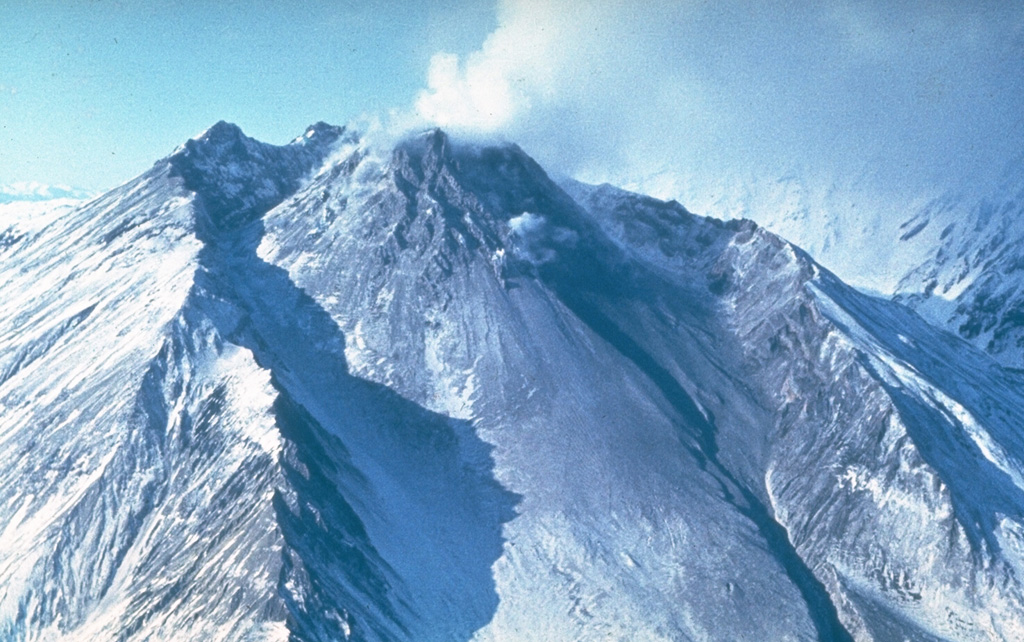 Bezymianny BezymiannyCentral Kamchatka (Russia) | KVERT reported that a daily thermal anomaly over Bezymianny was visible in satellite images during 2-8 April. Strong fumarolic activity, incandescence at the lava dome, and avalanches were also reported. The Aviation Colour Lawmaking remained at Xanthous (the second lowest level on a 4-colour scale). Dates are based on UTC times; specific events are in local time where noted. Source: Kamchatkan Volcanic Eruption Response Team (KVERT) |
Poas | 6 April-12 April 2022 | New Action / Unrest | |
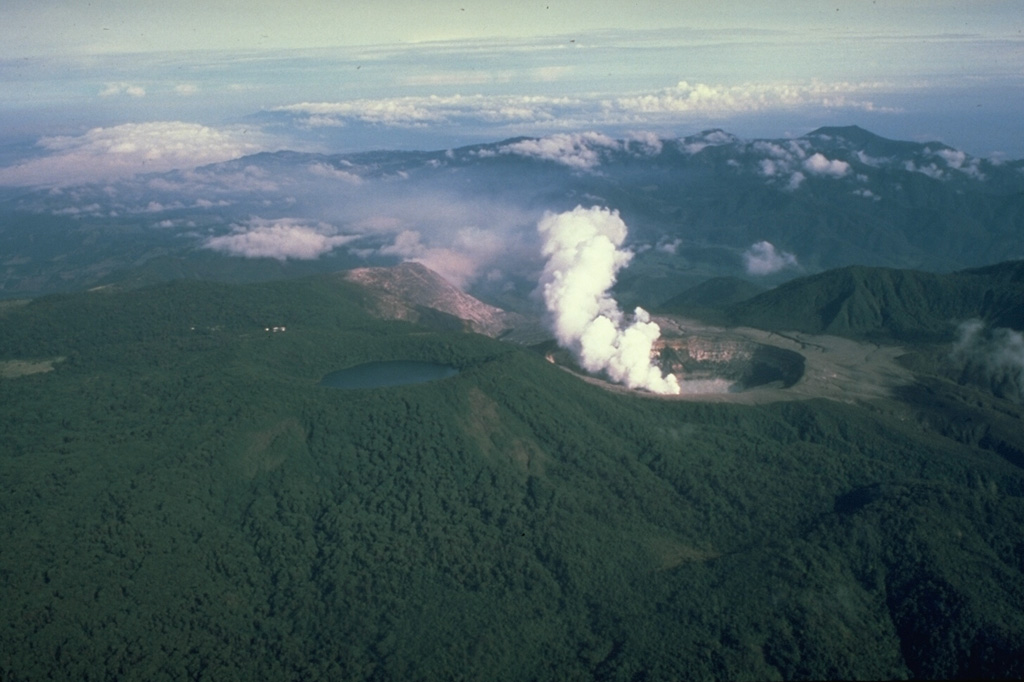 Poas PoasRepublic of costa rica | OVSICORI-UNA reported that on 6 April at 0240 a phreatic explosion from a vent chosen "Orange Fumarola" located in a fumarolic field along the inner N crater wall at Poás generated a feather that rose 500 m in a higher place the crater rim. Activity lasted for iii minutes. The event caused a minor landslide that modified the vent. Some of the cloth from the landslide was deposited in a narrow strip nearly 100 m into the Boca A lake. Stirred sediment was visibly moving in convection cells, turning the lake h2o from green to a uniform milky grayness colour equally the sediment mixed into the h2o. Subaerial fumarolic vents at the E and Southward parts of the lake more than vigorously emitted gasses following the event and remained at that level at least through 12 April. Convection in the lake also continued. OVSICORI-UNA noted that satellite data acquired the day before the explosion showed a total of 500 tons of sulfur dioxide released from both Poás and Turrialba. Source: Observatorio Vulcanologico y Sismologico de Costa rica-Universidad Nacional (OVSICORI-UNA) |
Purace | 6 April-12 Apr 2022 | New Activity / Unrest | |
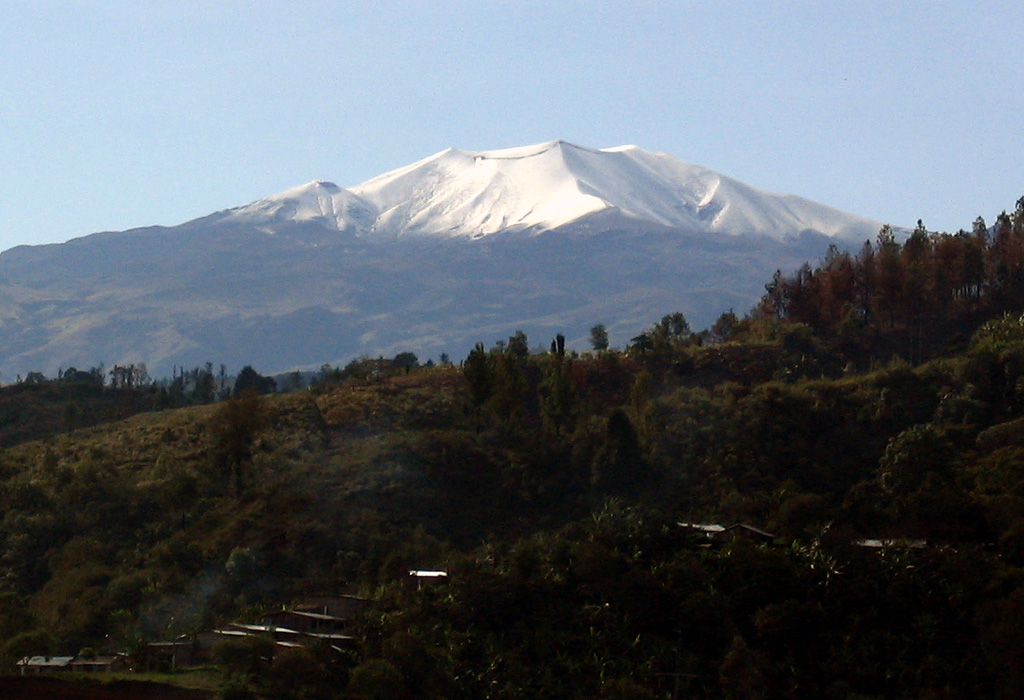 Purace PuraceColombia | On 29 March Observatorio Vulcanológico y Sismológico de Popayán, Servicio Geologico Colombiano (SGC), reported that the number of earthquakes at Puracé had increased during the previous few weeks, and were characterized by volcano-tectonic (VT) events, indicating rock fracturing, and long-flow (LP) and volcanic tremor (TR) events, indicating fluid movement. The number of events notably increased on 28 March, with 479 VT, 183 (LP), and 119 (TR) events in total. The magnitudes of events abruptly increased the next twenty-four hour period; the largest event was a 1000 3.3 recorded at 1214 on 29 March. Two fractures opened on 29 March, each about 40 m long, and produced gas emissions detected past satellite; ash was reported by observers in the expanse. The fractures were located along Coconucos Volcanic Chain, between Puracé Volcano and Curiquinga Volcano. The Alert Level was raised to Yellow (the 2d everyman on a iv-color calibration) on thirty March. Seismicity continued to exist elevated through 4 Apr. The earthquakes were depression magnitude, and located about 800 m SE of Puracé and beneath Curiquinga, at depths of 2 km on boilerplate. The number of events signifying fluid movement was increasing. GNSS (Global Navigation Satellite System) geodetic network and DInSAR (Differential Interferometry by Synthetic Aperture Radar) showed aggrandizement on the millimeter scale. Sulfur dioxide and carbon dioxide emissions increased, based on satellite and footing-based sampling information, and a fumarole on the Northward flank of Puracé intensified and produced a strong sulfur scent. Meaning unrest continued during 5-11 April. The seismic network recorded a total of 2,077 earthquakes, consisting of 248 VT events, 1,759 LP events, 37 depression-free energy TR events, and 31 hybrid events. Millimeter-scale inflation persisted, and sulfur dioxide emissions averaged i,800 tonnes per day. Source: Servicio Geológico Colombiano (SGC) |
Ruapehu | 6 April-12 Apr 2022 | New Action / Unrest | |
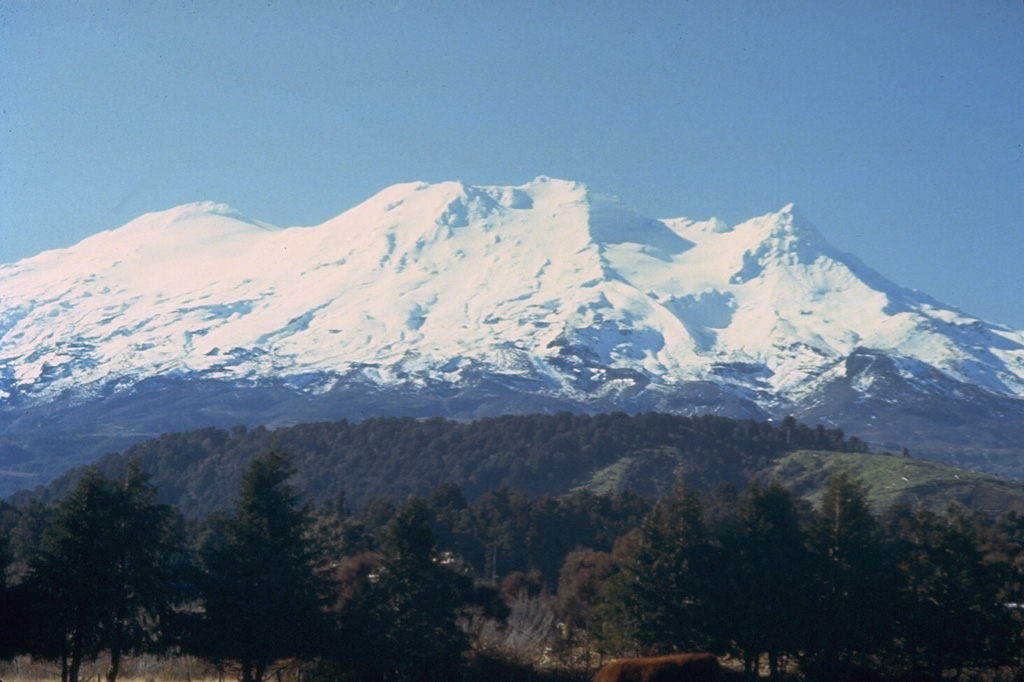 Ruapehu RuapehuNorthward Isle (New Zealand) | On 12 April GeoNet reported that unrest at Ruapehu had intensified during the previous week, characterized by increased gas emissions, elevated tremor, and increasing crater lake water temperatures. Tremor levels were elevated but had declined from the peak reached during vi-vii April. College levels of gas emissions were confirmed during an overflight on xi Apr; a pinnacle carbon dioxide value was the second highest ever recorded at Ruapehu. Lake temperatures continued to slowly climb and reached 38 degrees Celsius. The lake water was grey in color and had expanse of upwelling over the N vents; sulfur slicks on the lake's surface were visible. GeoNet noted that temperature and modeled rut input to the lake were within typical ranges for a heating cycle, though the elevated tremor levels and gas emissions suggested that magma was interacting with the geothermal organisation. The Volcanic Alarm Level remained at 2 (on a calibration from 0-5) and the Aviation Color Code remained at Xanthous. Source: GeoNet |
Taal | 6 April-12 Apr 2022 | New Activity / Unrest | |
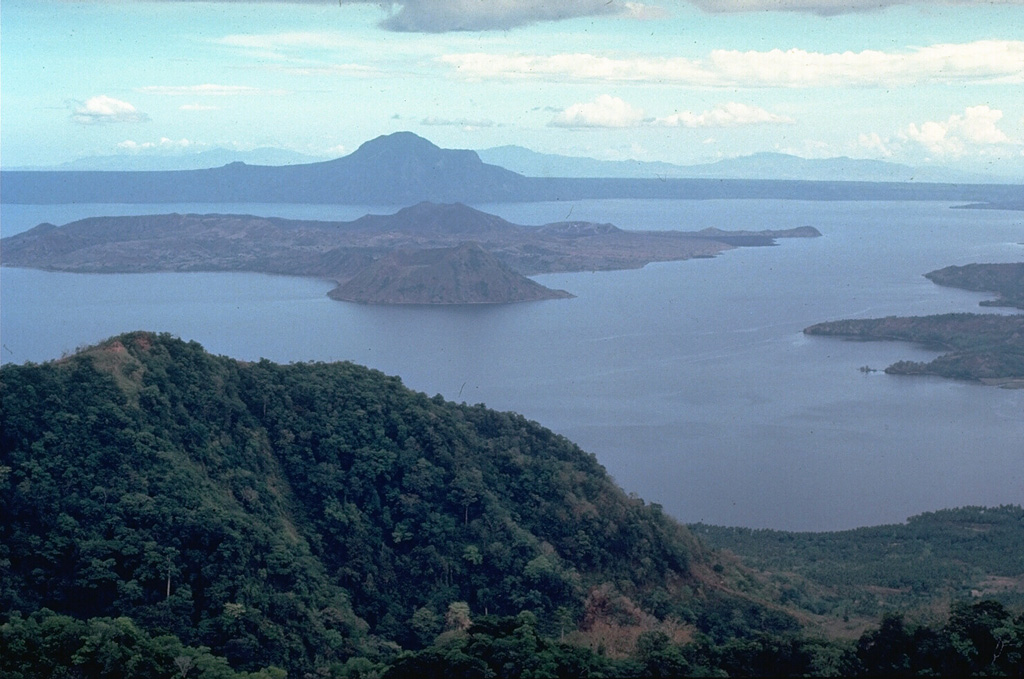 Taal TaalLuzon (Philippines) | PHIVOLCS lowered the Alert Level for Taal to 2 (on a scale of 0-v) on ix April, noting a significant decrease in action during the previous two weeks. Sulfur dioxide emissions were high during the showtime three weeks of March, peaking at 21,211 tonnes per day on sixteen March, merely dropped on 3 April to an average of 240 tonnes per day; the flux over again decreased to 103 tonnes per solar day on eight April, the lowest number recorded since unrest began in 2021. During 26 March-9 Apr only 86 small-magnitude and imperceptible volcanic earthquakes had been recorded, and past 31 March background tremor associated with shallow hydrothermal activity had ceased. Electronic tilt monitoring on Taal Volcano Island, continuous Global Positioning Organization (GPS) information, and InSAR analysis of Sentinel-1 satellite information indicated continuing deflation of Taal, specially on the SE flank. Lengthened plumes from the lake had also decreased in frequency, though they rose 600-900 m higher up the surface during 10-12 April. Sulfur dioxide emissions were below instrumental detection limits on 11 April. PHIVOLCS reminded the public that the unabridged Taal Volcano Island is a Permanent Danger Zone (PDZ). Source: Philippine Establish of Volcanology and Seismology (PHIVOLCS) |
 Cite this Report
 Aira | 6 April-12 Apr 2022 | Continuing Activity | |
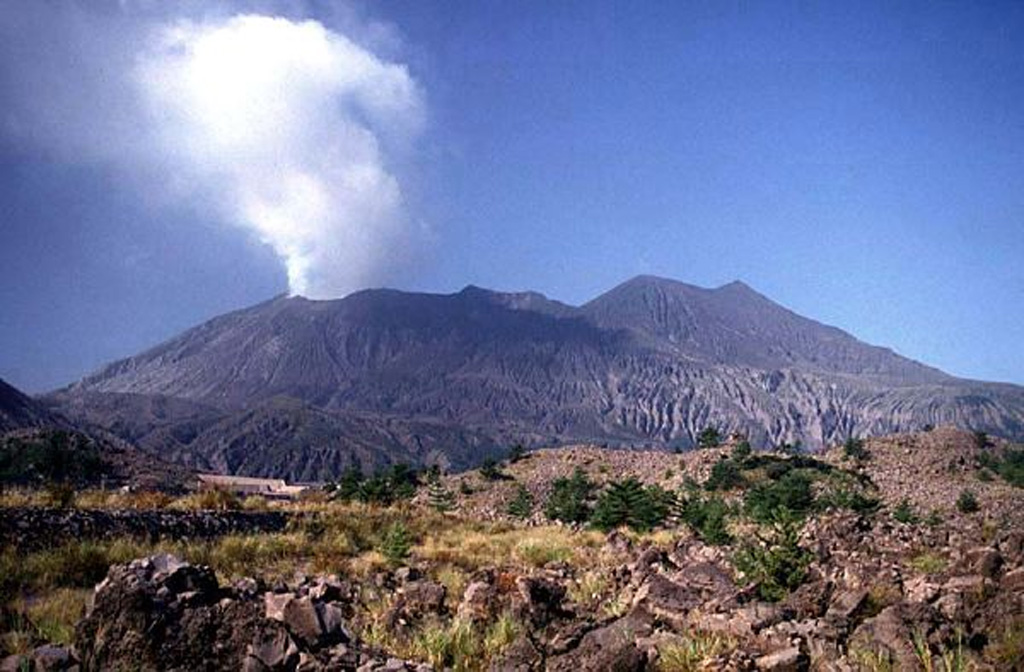 Aira AiraKyushu (Japan) | JMA reported that incandescence at Minamidake Crater (at Aira Caldera'due south Sakurajima volcano) was visible at night during 4-xi April. Very small eruptive events were recorded on vi and nine April. The Warning Level remained at 3 (on a 5-level calibration), and residents were warned to stay 2 km away from the crater. Source: Japan Meteorological Agency (JMA) |
Dukono | half dozen April-12 April 2022 | Continuing Activity | |
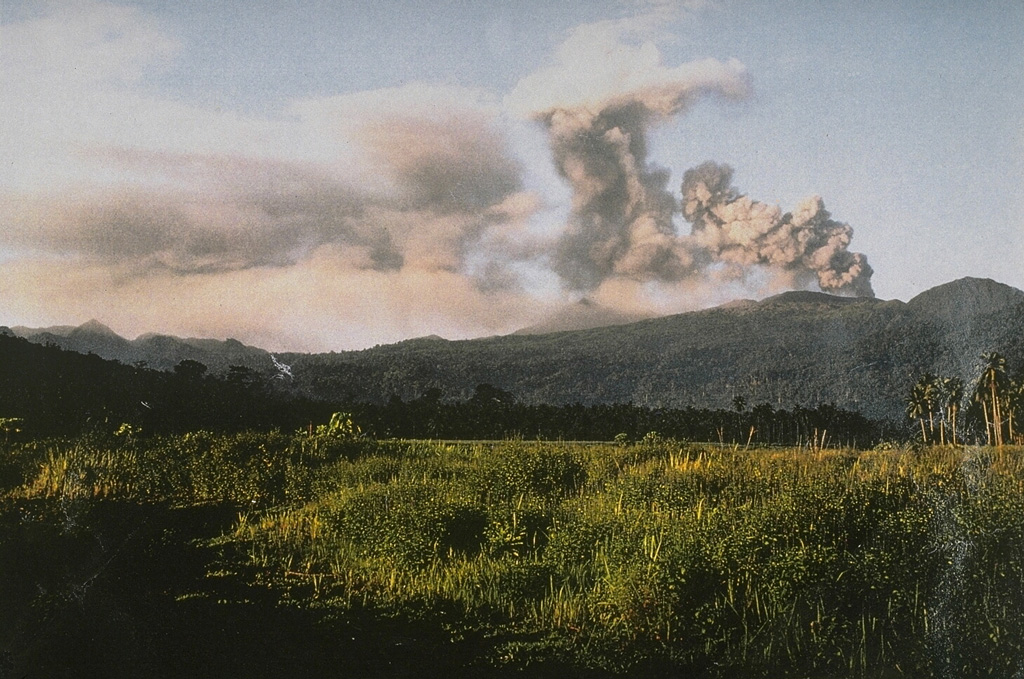 Dukono DukonoHalmahera | Based on satellite and wind model data, the Darwin VAAC reported that during vii-12 April ash plumes from Dukono rose to two.one-2.iv km (seven,000-8,000 ft) a.due south.fifty. and drifted NE and NW. The Warning Level remained at ii (on a scale of 1-4), and the public was warned to remain exterior of the 2-km exclusion zone. Sources: Darwin Volcanic Ash Advisory Middle (VAAC), Pusat Vulkanologi dan Mitigasi Bencana Geologi (PVMBG, also known as CVGHM) |
Groovy Sitkin | half-dozen April-12 April 2022 | Continuing Activeness | |
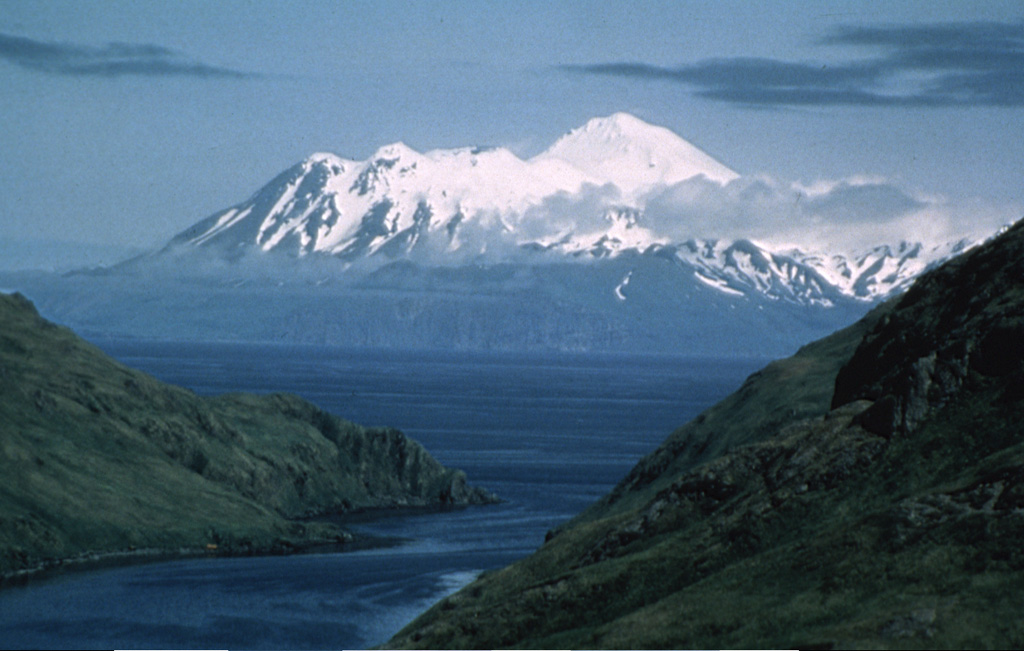 Corking Sitkin Corking SitkinAndreanof Islands (USA) | AVO reported that slow lava effusion at Corking Sitkin continued during 5-12 April and very low seismicity persisted. The lava flows on the S, Due west, and Northward flanks had advanced up to 10 grand during 2-eight Apr, and elevated surface temperatures identified in satellite images during 8-10 April indicated standing effusion. Steaming from the vent and flow field was occasionally identified in satellite images. The Aviation Color Code and the Volcano Alert Level remained at Orangish and Watch, respectively. Source: US Geological Survey Alaska Volcano Observatory (AVO) |
Heard | 6 April-12 Apr 2022 | Continuing Activity | |
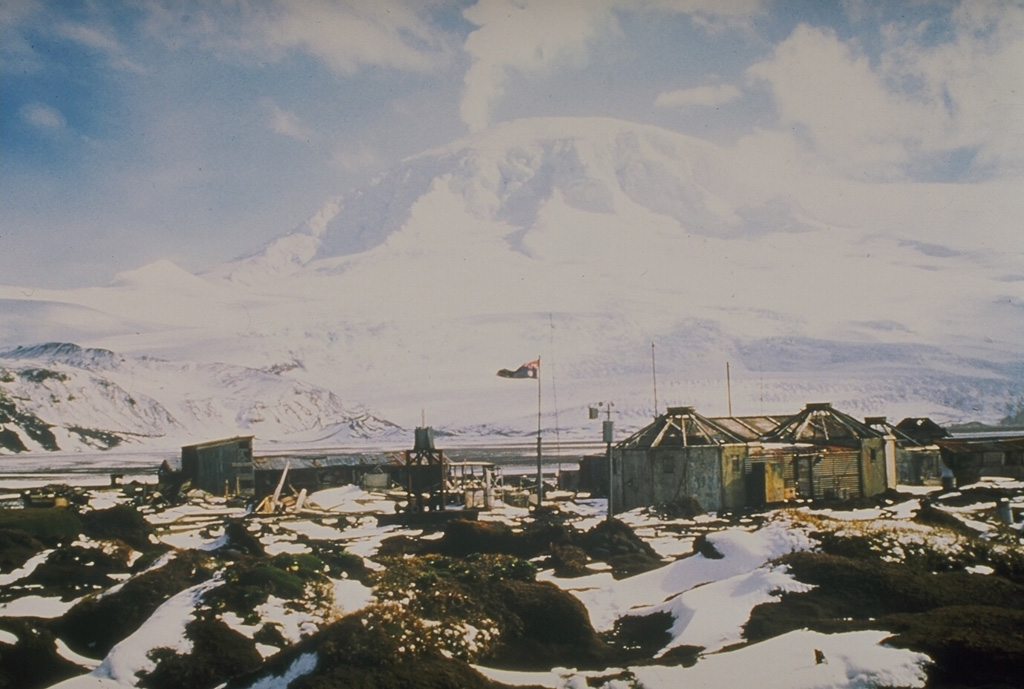 Heard HeardKerguelen Plateau | Satellite images of Heard Isle'southward Large Ben volcano showed thermal anomalies of varying intensity over Mawson Meridian (the summit expanse) and on the NW flank during the previous calendar month. Weather clouds prevented views of the volcano for 11 of the 14 acquisitions during 11 March-13 April. On xi March a small thermal anomaly at the top was visible forth with a larger anomaly over a vent or multiple vents almost 1 km W; the larger anomaly was elongated NE-SW, suggesting a lava flow. Multiple anomalies in the same areas were visible on 31 March and 13 Apr. Source: Sentinel Hub |
Kadovar | 6 April-12 April 2022 | Continuing Activity | |
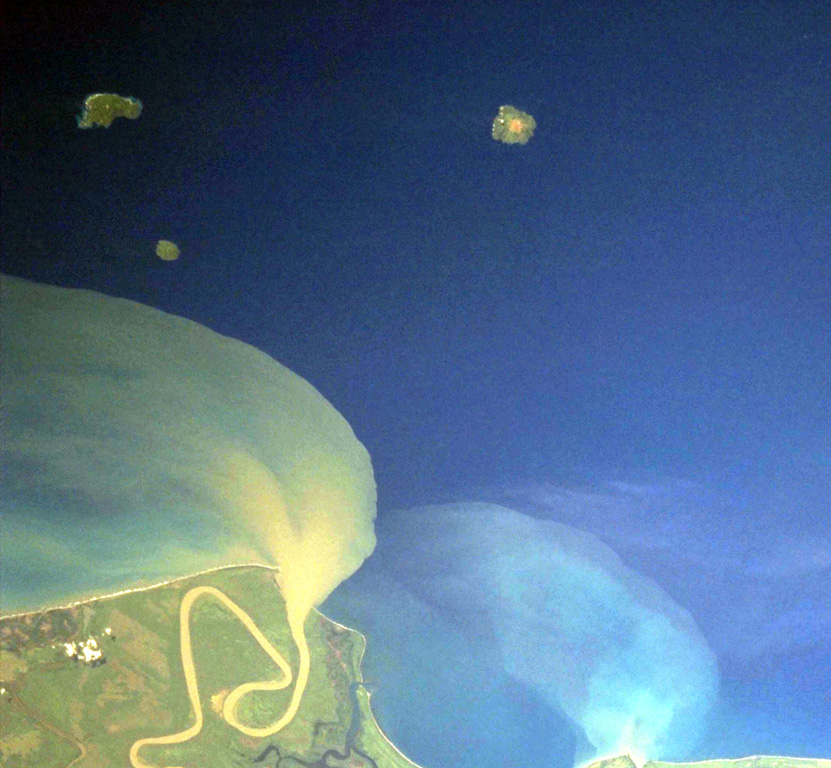 Kadovar KadovarNortheast of New Guinea | Based on satellite and wind model data, the Darwin VAAC reported that on 8 Apr an ash plume from Kadovar rose to an altitude of 1.5 km (5,000 ft) a.south.l. and drifted SE. Source: Darwin Volcanic Ash Advisory Centre (VAAC) |
Karymsky | vi April-12 April 2022 | Standing Activity | |
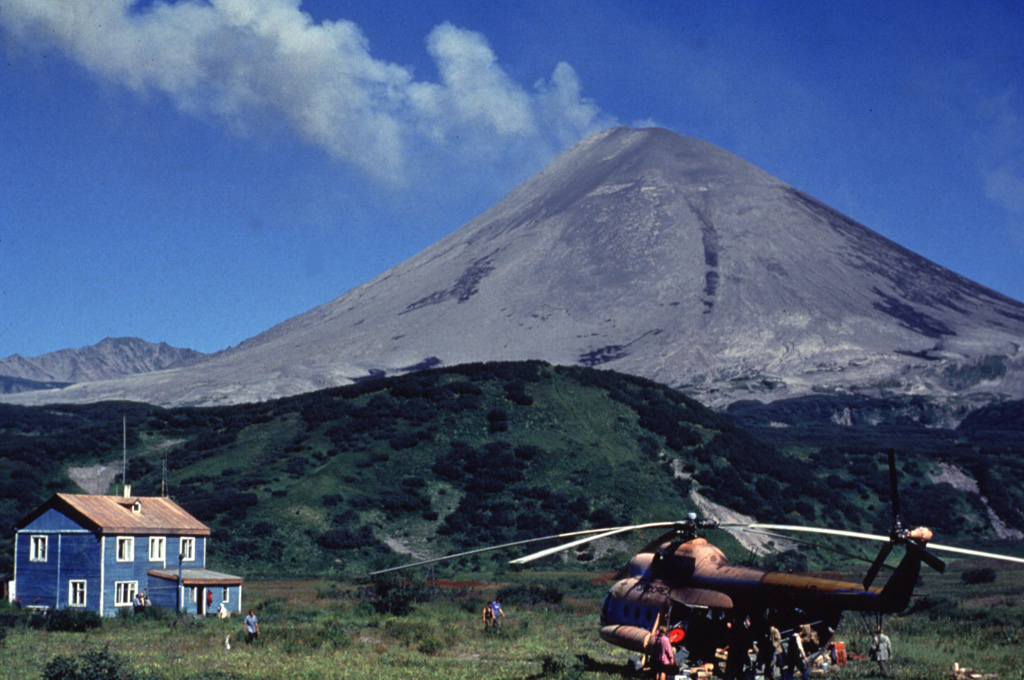 Karymsky KarymskyEastern Kamchatka (Russia) | KVERT reported that a thermal anomaly over Karymsky was visible in satellite images on 3 and 5-half-dozen April; the volcano was quiet or obscured by clouds on the other days during 1-8 April. The Aviation Colour Lawmaking remained at Orange (the 2nd highest level on a 4-color scale). Dates are based on UTC times; specific events are in local time where noted. Source: Kamchatkan Volcanic Eruption Response Team (KVERT) |
Katmai | 6 April-12 April 2022 | Continuing Action | |
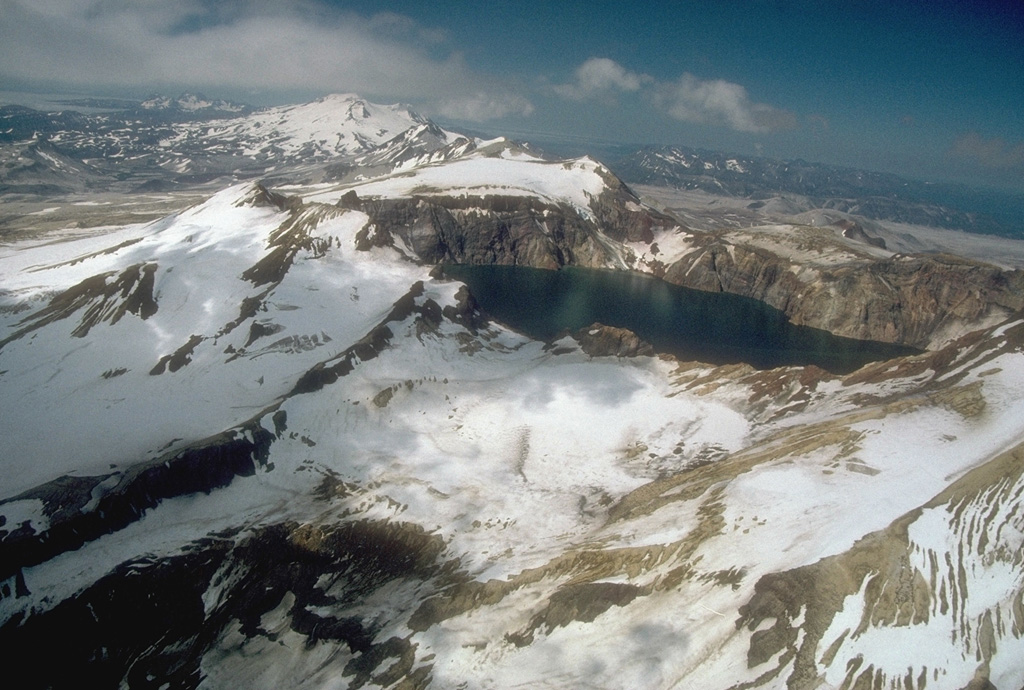 Katmai KatmaiAlaska | AVO reported that on 8 April strong winds in the vicinity of Katmai and the Valley of Ten Chiliad Smokes blew unconsolidated ash SE towards Kodiak Island at an altitude upward to two.iv km (eight,000 ft) a.due south.l. The ash was originally deposited during the Novarupta eruption in 1912. The Volcano Alarm Level remained at Normal and the Aviation Color Code remained at Green. Source: U.s. Geological Survey Alaska Volcano Observatory (AVO) |
Kilauea | 6 April-12 April 2022 | Continuing Activeness | |
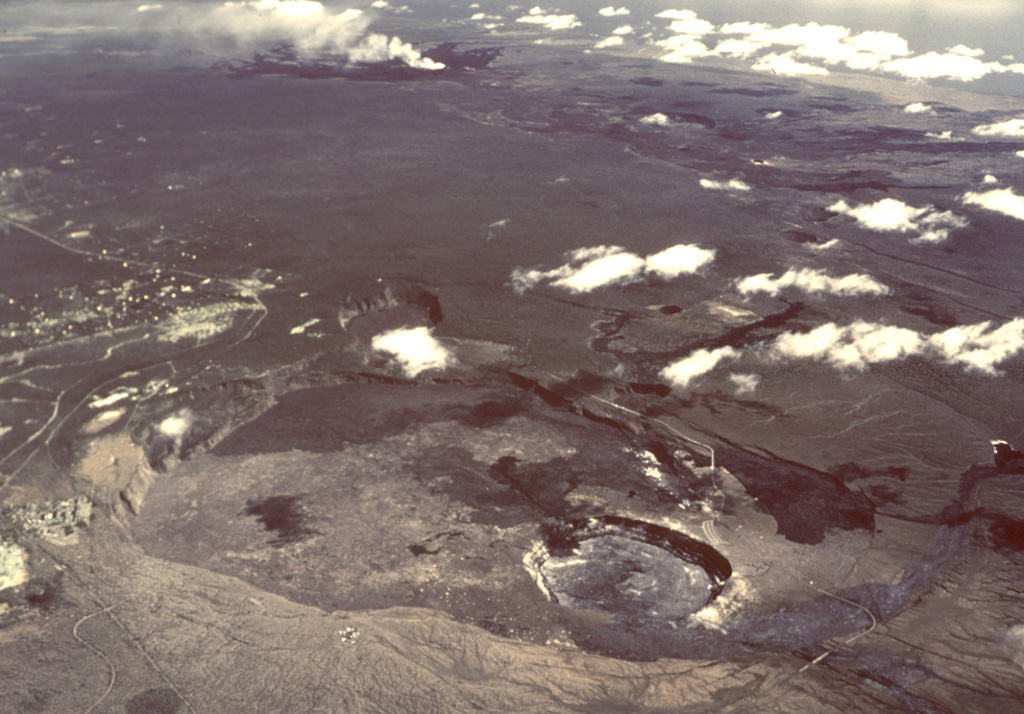 Kilauea KilaueaHawaiian Islands (USA) | HVO reported that lava effusion from a vent in the lower W wall of Kilauea's Halema`uma`u Crater continued at variable rates during v-12 Apr. Lava from a vent flowed into the active W part of the lava lake, which comprised well-nigh 2.three pct of the total crater floor's surface, and onto the crater floor. The surface of the lava lake was active all week, and the height of the lake fluctuated. Numerous ooze outs of lava were visible along the lake's NW, NE, E, and SE margins; a more substantial ooze-out at the North margin was active during 6-7 April. A small outbreak at the Westward vent was visible overnight during eight-9 April. Just later on 2300 on 10 Apr a menstruation emerged from the Due south side on the vent that covered areas along the southwest and western margins through 12 Apr. The Aviation Colour Code and the Volcano Alert Level remained at Orangish and Sentry, respectively. Source: US Geological Survey Hawaiian Volcano Observatory (HVO) |
Lewotolok | 6 April-12 April 2022 | Continuing Activeness | |
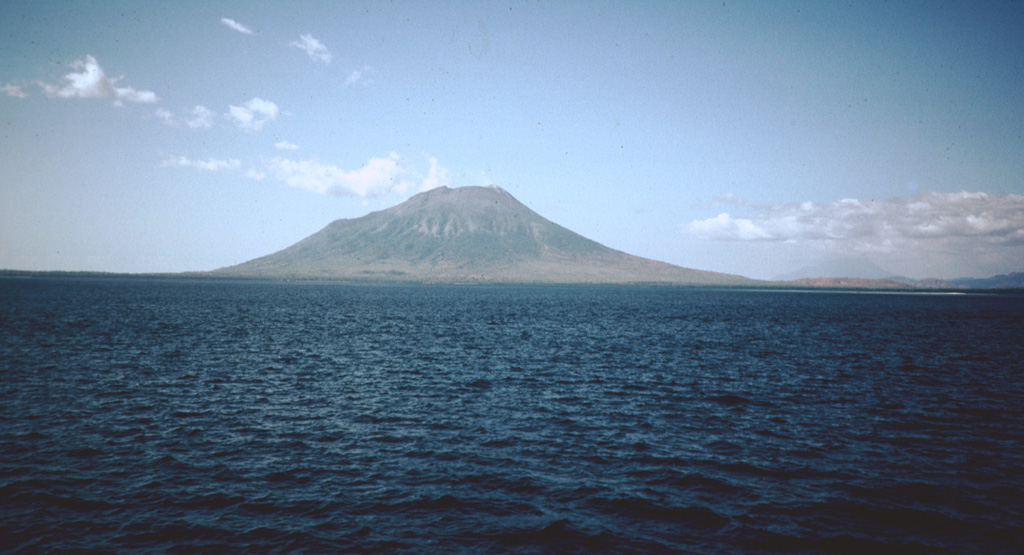 Lewotolok LewotolokLembata Island | The eruption at Lewotolok connected during 5-12 April according to PVMBG. Daily white-and-greyness ash plumes with variable densities rose as high every bit 500 one thousand above the summit and drifted E, NW, and W. Photos posted by PVMBG showed dark crater incandescence and incandescent fabric being ejected. The Alert Level remained at 3 (on a scale of 1-4) and the public was warned to stay 3 km abroad from the peak crater. Source: Pusat Vulkanologi dan Mitigasi Bencana Geologi (PVMBG, besides known as CVGHM) |
Merapi | 6 April-12 April 2022 | Continuing Activity | |
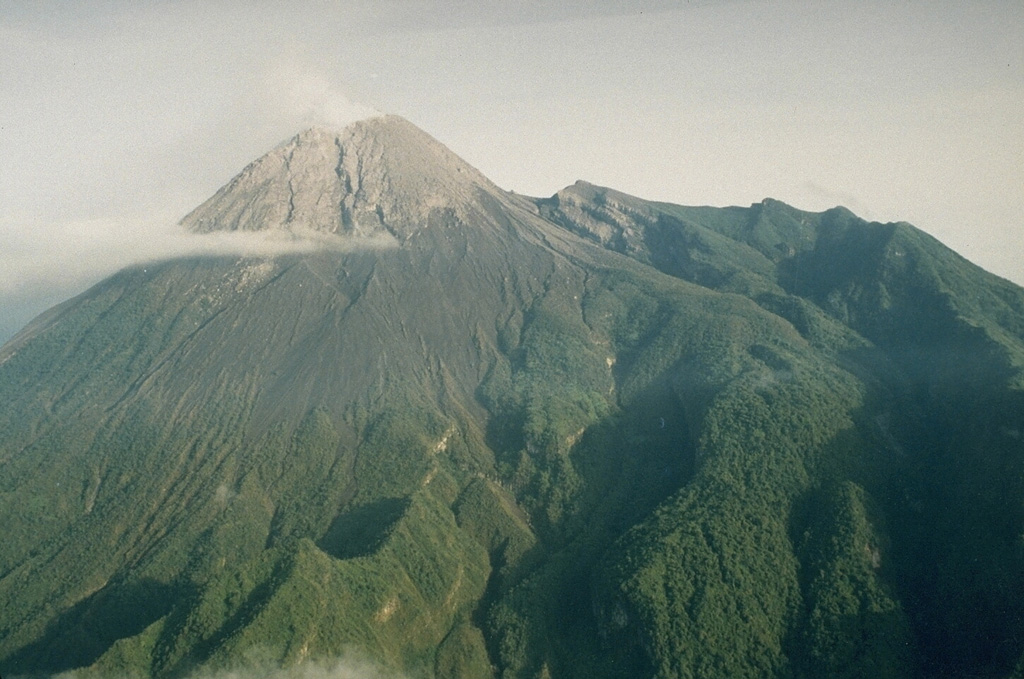 Merapi MerapiFundamental Java | BPPTKG reported no significant morphological changes at Merapi's tiptop lava dome during 1-seven Apr. Based on photograph analyses, the book of the SW lava dome was 1.7 1000000 cubic meters while the primal lava dome was ii.6 million cubic meters. Seismicity remained at loftier levels. Equally many as 144 lava avalanches originating from the SW dome traveled a maximum of 2 km downwardly the Bebeng drainage on the SW flank. A single pyroclastic menses traveled 1.5 km downward the SW flank. The Alert Level remained at 3 (on a scale of 1-four), and the public was warned to stay 3-five km abroad from the elevation based on location. Source: Balai Penyelidikan dan Pengembangan Teknologi Kebencanaan Geologi (BPPTKG) |
Nevado del Ruiz | six April-12 April 2022 | Standing Activity | |
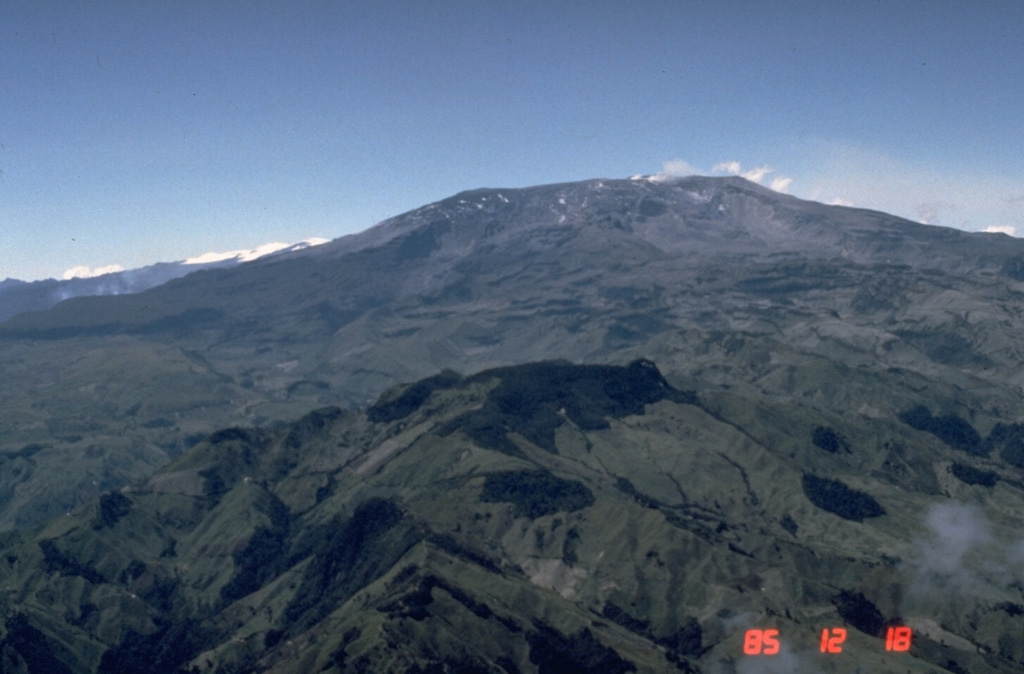 Nevado del Ruiz Nevado del RuizColombia | Servicio Geológico Colombiano'due south (SGC) reported that at 1713 on 11 Apr a seismic indicate at Nevado del Ruiz was recorded forth with an ash, gas, and steam plume. The plume rose near 3.3 km above the summit and drifted North, causing minor ashfall around the volcano as reported by Parque Nacional Natural Los Nevados staff. It was also visible in webcam images and from the city of Manizales, 28 km NW. The Alert Level remained at 3 (Yellow; the second lowest level on a four-color calibration). Source: Servicio Geológico Colombiano (SGC) |
Pavlof | half-dozen April-12 April 2022 | Standing Action | |
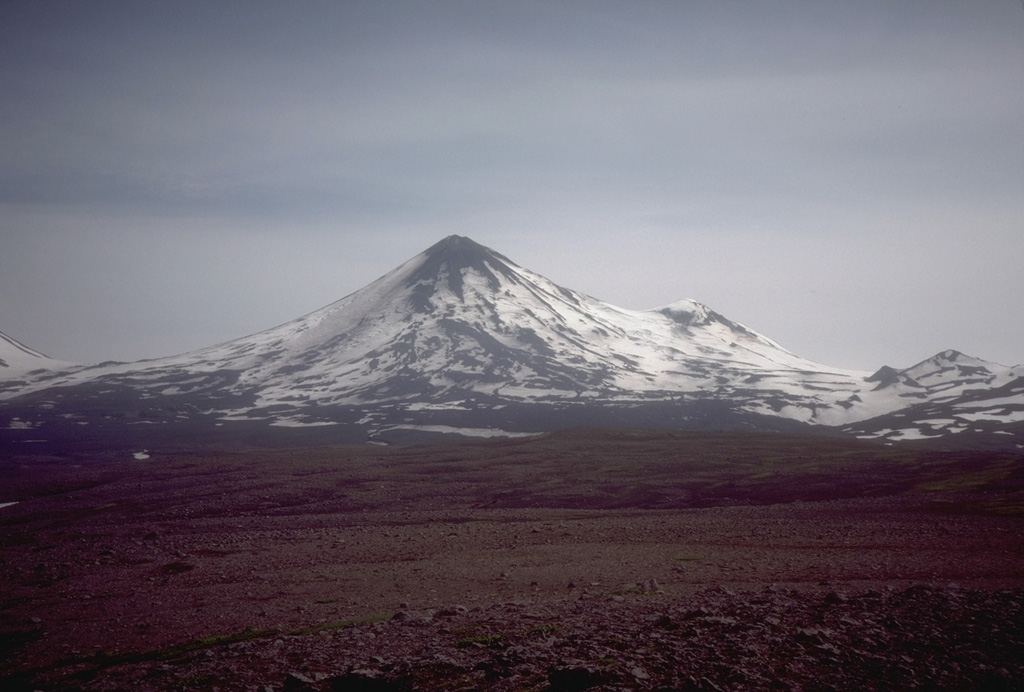 Pavlof PavlofAlaska Peninsula, Alaska | AVO reported that the eruption at a vent on Pavlof's upper East flank was ongoing during 5-12 April, and seismic tremor persisted. Elevated surface temperatures were identified in satellite images almost daily. Possible minor lava effusion was visible in satellite images on half dozen April, and a few small explosions were recorded each day during 6-9 April. Low-level ash emissions were visible in webcam and satellite images during vi-seven April, and satellite images captured ash and pyroclastic menses deposits extending at most 1.5 km from the vent and curt lava flows on 9 April. Steam emissions from the vent were visible during 8-10 April. The Volcano Alert Level remained at Picket and the Aviation Colour Code remained at Orange. Source: US Geological Survey Alaska Volcano Observatory (AVO) |
Rincon de la Vieja | 6 April-12 Apr 2022 | Standing Activity | |
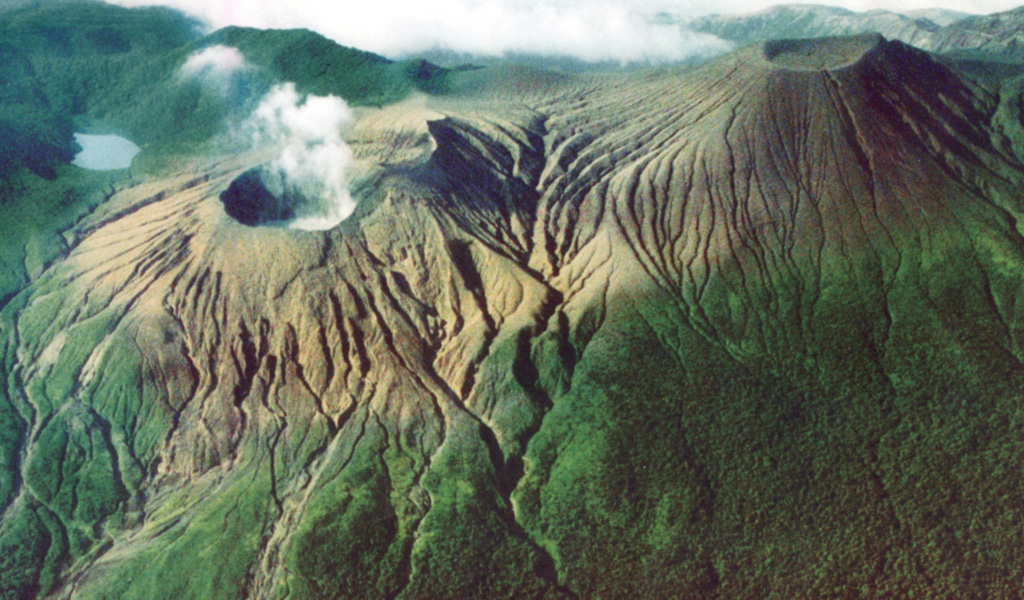 Rincon de la Vieja Rincon de la ViejaCosta Rica | OVSICORI-UNA reported that a small eruptive event at Rincón de la Vieja was recorded at 0136 on 6 Apr, though the event was non visible due to poor visibility. Two pocket-sized phreatic eruptions were recorded on 7 April at 1141 and 1323, based on webcam data. The resulting plumes rose one,000 m and 500 thou above the crater, respectively. Source: Observatorio Vulcanologico y Sismologico de Costa Rica-Universidad Nacional (OVSICORI-UNA) |
Sabancaya | 6 April-12 April 2022 | Continuing Activity | |
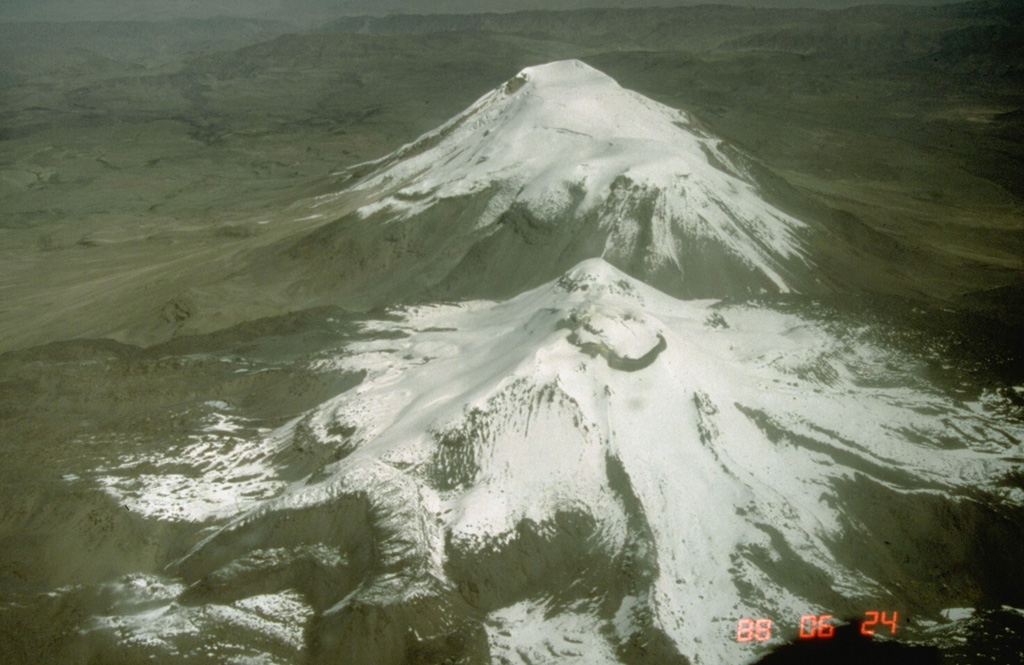 Sabancaya SabancayaRepublic of peru | Instituto Geofísico del Perú (IGP) reported moderate levels of activity at Sabancaya during iv-ten April with a daily boilerplate of 52 explosions. Gas-and-ash plumes rose every bit loftier as 2.5 km to a higher place the meridian and drifted E, SE, and S. Three thermal anomalies originating from the lava dome in the peak crater were identified in satellite information. Minor inflation continued to be detected near Hualca Hualca (4 km North). The Alert Level remained at Orange (the second highest level on a four-color calibration) and the public were warned to stay exterior of a 12-km radius. Source: Instituto Geofísico del Perú (IGP) |
Semeru | vi April-12 April 2022 | Continuing Activity | |
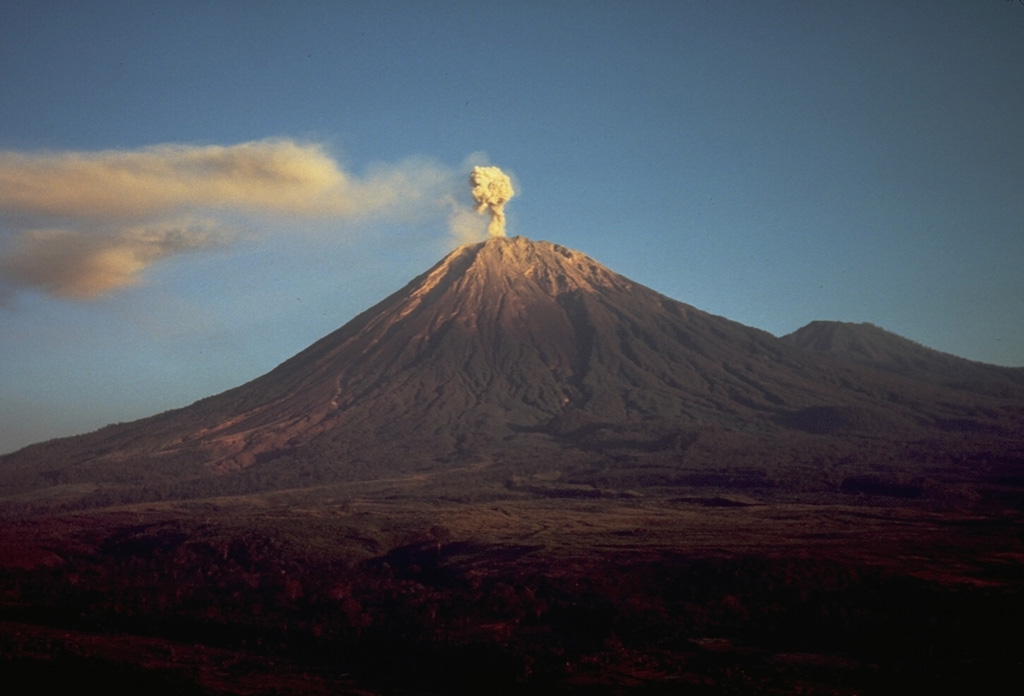 Semeru SemeruEastern Java | PVMBG reported that the eruption at Semeru continued during 5-12 April. Ash plumes rose 0.iv-1 km above the summit during half dozen and 8-12 April and drifted N. NW, and SW. The Alert Level remained at 3 (on a scale of 1-4). The public was warned to stay at least 500 m away from Kobokan drainages within 17 km of the summit, along with other drainages originating on Semeru, including the Bang, Kembar, and Sat, due to lahar, barrage, and pyroclastic flow hazards. Source: Pusat Vulkanologi dan Mitigasi Bencana Geologi (PVMBG, also known as CVGHM) |
Semisopochnoi | half dozen Apr-12 April 2022 | Continuing Activity | |
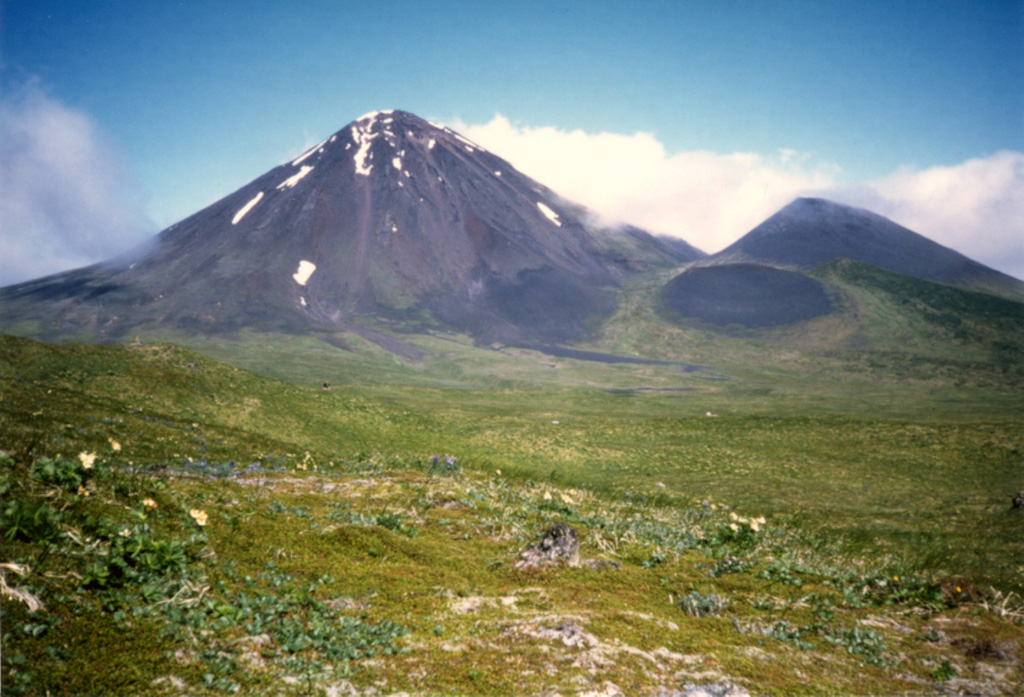 Semisopochnoi SemisopochnoiAleutian Islands (USA) | AVO reported that low-level eruptive activity at Semisopochnoi'southward Due north Cerberus cone continued during 6-12 Apr. Periods of seismic tremor were detected daily and occasional small explosions were recorded on most days in seismic and regional infrasound information. Partly-to-more often than not-cloudy webcam views and occasional satellite images showed daily brusk-lived ash bursts and more continuous steam emissions. Steam plumes drifted as far as 70 km SW during 6-seven Apr. A low-level steam plume drifted more than 100 km at altitudes less than i.5 km (5,000 ft) a.s.l. during 7-8 April. A low-level ash plume drifted up to 80 km WNW on viii April. Local ash deposits were occasionally visible. The Aviation Color Lawmaking remained at Orange and the Volcano Alert Level remained at Watch. Source: U.s.a. Geological Survey Alaska Volcano Observatory (AVO) |
Sheveluch | half-dozen Apr-12 Apr 2022 | Continuing Activity | |
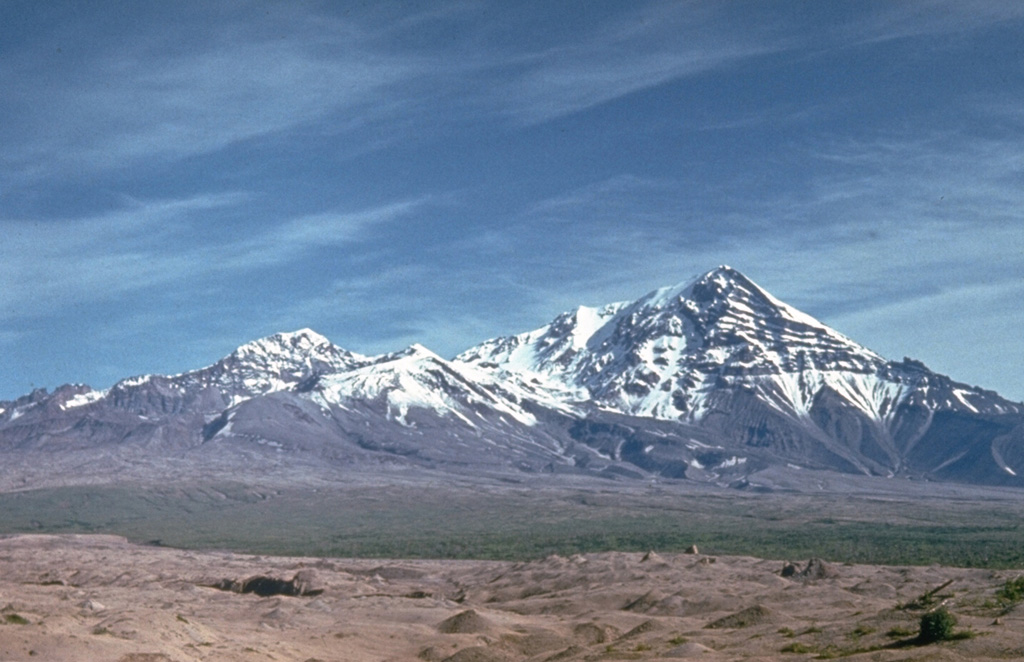 Sheveluch SheveluchCardinal Kamchatka (Russia) | KVERT reported that a thermal bibelot over Sheveluch was identified in satellite images during 2-8 Apr. The lava dome connected to abound and strong fumarolic activity, incandescence, and avalanches accompanied this activity. The Aviation Colour Code remained at Orange (the 2d highest level on a 4-color scale). Dates are based on UTC times; specific events are in local time where noted. Source: Kamchatkan Volcanic Eruption Response Squad (KVERT) |
Suwanosejima | vi April-12 Apr 2022 | Continuing Activity | |
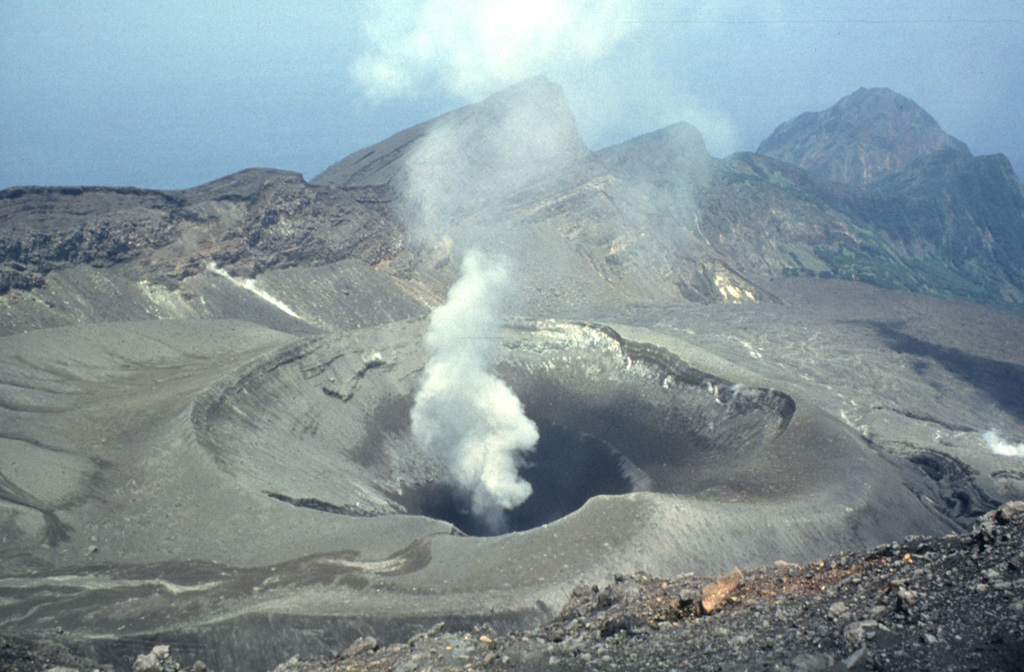 Suwanosejima SuwanosejimaRyukyu Islands (Japan) | JMA reported that eruptive activeness continued to be recorded at Suwanosejima's Ontake Crater during four-8 April. Two explosions produced eruption plumes that rose as high as iii.three km above the crater rim and ejected blocks as far as 500 m from the crater. Ashfall was reported in Toshima village (three.v km SSW). No eruptive activeness was noted during 9-11 April, though emissions rose 700 m. The Alert Level remained at 3 and the public was warned to stay ii km away from the crater. Source: Japan Meteorological Agency (JMA) |
Wolf | vi Apr-12 April 2022 | Continuing Activity | |
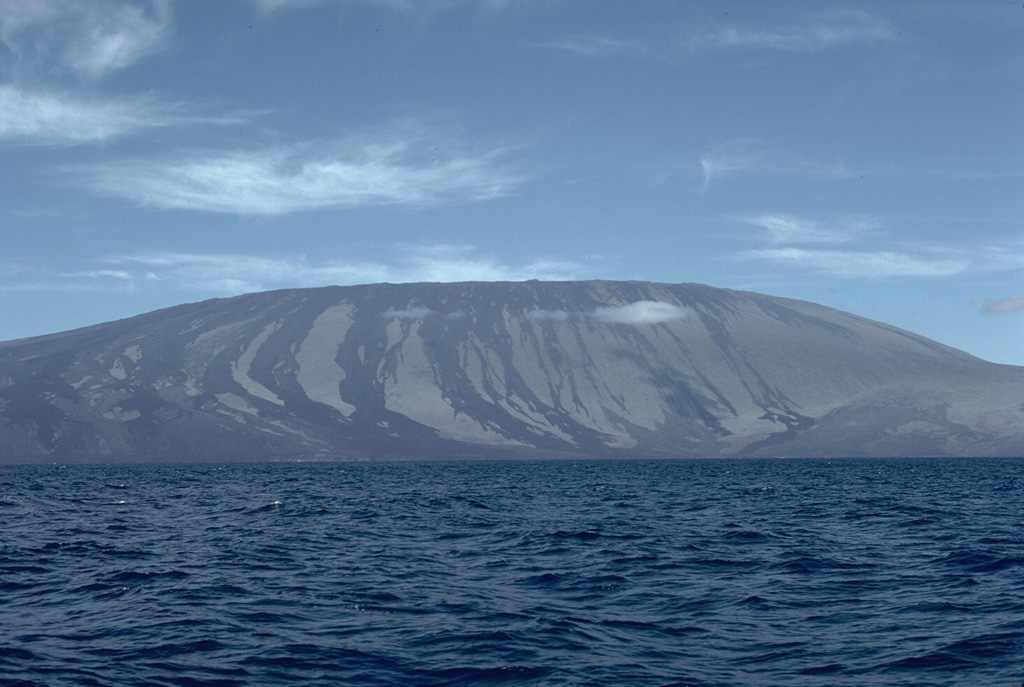 Wolf WolfIsla Isabela (Galapagos) | IG reported that the eruption at Wolf continued during 5-12 April. Pocket-sized sulfur dioxide emissions were recorded during v-6 April. Thermal data captured and mapped on half-dozen April indicated that lava flows were getting closer to the coast; daily thermal alert counts, every bit many as effectually 154, indicated active and advancing lava flows during the rest of the calendar week. Source: Instituto Geofísico-Escuela Politécnica Nacional (IG) |
Yasur | vi April-12 April 2022 | Continuing Activeness | |
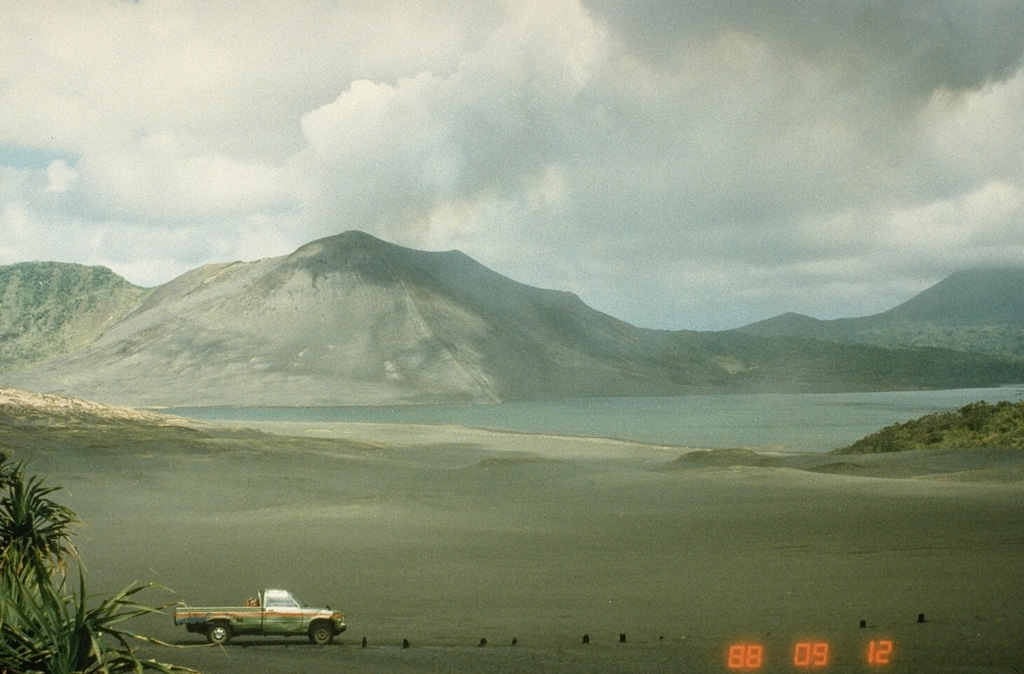 Yasur YasurVanuatu | The Wellington VAAC reported that during 9 and eleven-12 April ash-and-steam emissions from Yasur were intermittently visible in webcam and satellite images rising 0.9-1.8 km (3,000-6,000 ft) a.south.l. and drifting SE. Source: Wellington Volcanic Ash Advisory Eye (VAAC) |
Weekly Reports Annal
Since the Weekly Volcanic Activity Report began in November 2000, in that location have been 17,671 individual reports over 1,110 weeks (boilerplate of 16 per week) on 319 different volcanoes.
Use the dropdowns to cull the year and calendar week for archived Weekly Reports.
| Agung | Concepcion | Ibu | Leroboleng | Pavlof | Sotara |
| Ahyi | Copahue | Ijen | Lewotobi | Pelee | Soufriere Hills |
| Aira | Cotopaxi | Iliamna | Lewotolok | Peuet Sague | Soufriere St. Vincent |
| Akan | Cuicocha | Iliwerung | Little Sitkin | Pinatubo | Southward Sarigan Seamount |
| Alaid | Cumbal | Inielika | Llaima | Planchon-Peteroa | Spurr |
| Alu-Dalafilla | Dabbahu | Ioto | Lokon-Empung | Poas | St. Helens |
| Ambae | Davidof | Irazu | Lonquimay | Popocatepetl | Stromboli |
| Ambang | Dempo | Iya | Lopevi | Purace | Sulu Range |
| Ambrym | Descabezado Grande | Izu-Torishima | Machin | Puyehue-Cordon Caulle | Sumbing |
| Anatahan | Dieng Volcanic Complex | Jackson Segment | Makushin | Rabaul | Sundoro |
| Aniakchak | Dukono | Kaba | Maly Semyachik | Raikoke | Suretamatai |
| Antillanca Volcanic Complex | Ebeko | Kadovar | Manam | Ranakah | Suwanosejima |
| Antuco | Ebulobo | Kama'ehuakanaloa | Manda Hararo | Raoul Island | Taal |
| Apoyeque | Egon | Kambalny | Marapi | Rasshua | Tair, Jebel at |
| Arenal | Ekarma | Kanaga | Maroa | Raung | Takawangha |
| Asamayama | Epi | Kanlaon | Martin | Redoubt | Talang |
| Askja | Erebus | Karangetang | Masaya | Reventador | Tambora |
| Asosan | Erta Ale | Karkar | Maule, Laguna del | Reykjanes | Tanaga |
| Atka Volcanic Complex | Etna | Karthala | Mauna Loa | Rincon de la Vieja | Tandikat-Singgalang |
| Augustine | Etorofu-Yakeyama [Grozny Group] | Karymsky | Mayon | Rinjani | Tangkoko-Duasudara |
| Avachinsky | Eyjafjallajokull | Kasatochi | McDonald Islands | Ritter Island | Tangkuban Parahu |
| Awu | Fernandina | Katla | Melimoyu | Rotorua | Tara, Batu |
| Centric Seamount | Fogo | Katmai | Merapi | Ruang | Telica |
| Azul, Cerro | Fonualei | Kavachi | Midagahara | Ruapehu | Tenerife |
| Azumayama | Fournaise, Piton de la | Kelimutu | Misti, El | Ruiz, Nevado del | Tengger Caldera |
| Bagana | Fourpeaked | Kelud | Miyakejima | Sabancaya | Three Sisters |
| Balbi | Fuego | Kerinci | Momotombo | Sakar | Tinakula |
| Bamus | Fujisan | Ketoi | Monowai | Salak | Tofua |
| Banda Api | Fukutoku-Oka-no-Ba | Kharimkotan | Montagu Island | San Cristobal | Tokachidake |
| Bardarbunga | Galeras | Kicking 'em Jenny | Moyorodake [Medvezhia] | San Miguel | Tolbachik |
| Arid Island | Galunggung | Kie Besi | Mutnovsky | San Vicente | Toliman |
| Batur | Gamalama | Kikai | Myojinsho | Sangay | Tongariro |
| Bezymianny | Gamkonora | Kilauea | Nabro | Sangeang Api | Tungurahua |
| Bogoslof | Gareloi | Kirishimayama | Negra, Sierra | Santa Ana | Turrialba |
| Brava | Gaua | Kita-Ioto | Negro, Cerro | Santa Maria | Ubinas |
| Bristol Isle | Gorely | Kizimen | Nightingale Island | Sao Jorge | Ugashik-Peulik |
| Bulusan | Bang-up Sitkin | Klyuchevskoy | Nishinoshima | Sarigan | Ukinrek Maars |
| Calbuco | Grimsvotn | Kolokol Group | Nisyros | Sarychev Top | Ulawun |
| Callaqui | Guagua Pichincha | Koryaksky | Novarupta | Saunders | Unnamed |
| Cameroon | Guallatiri | Krakatau | NW Rota-1 | Savo | Unnamed |
| Campi Flegrei del Mar di Sicilia | Guntur | Krummel-Garbuna-Welcker | Nyamulagira | Semeru | Veniaminof |
| Cayambe | Hachijojima | Krysuvik-Trolladyngja | Nyiragongo | Semisopochnoi | Villarrica |
| Chachadake [Tiatia] | Hakoneyama | Kuchinoerabujima | Okataina | Seulawah Agam | Vulcano |
| Chaiten | Heard | Kurikomayama | Okmok | Sheveluch | West Mata |
| Chiginagak | Hekla | Kusatsu-Shiranesan | Ontakesan | Shishaldin | Westdahl |
| Chikurachki | Helgrindur | Kverkfjoll | Oraefajokull | Simbo | Whakaari/White Island |
| Chiles-Cerro Negro | Hierro | La Palma | Osorno | Sinabung | Witori |
| Chillan, Nevados de | Hokkaido-Komagatake | Lamington | Pacaya | Sinarka | Wolf |
| Chirinkotan | Home Reef | Lamongan | Heathen | Siple | Yasur |
| Chirpoi | Hood | Langila | Palena Volcanic Grouping | Sirung | Zaozan [Zaosan] |
| Ciremai | Huaynaputina | Lanin | Paluweh | Slamet | Zavodovski |
| Cleveland | Hudson, Cerro | Lascar | Panarea | Snaefellsjokull | Zhupanovsky |
| Colima | Huila, Nevado del | Lateiki | Papandayan | Soputan | Zubair Grouping |
| Colo | Hunga Tonga-Hunga Ha'apai | Lengai, Ol Doinyo | Parker | Sorikmarapi |
News Feeds and Google Placemarks
Download Smithsonian / USGS Weekly Volcanic Activity Report Network RSS Feed
The RSS (Actually Simple Syndication) feed is identical to the Weekly Volcanic Activeness Report minus some features including the header data (breadth and longitude and summit elevation), the Geologic Summary, and a link to the volcano'due south page from the Global Volcanism Program. At the end of each report is a list of the sources used. Each volcano written report includes a link from the volcano'due south name dorsum to the more than complete information in the Weekly Volcanic Activity Report on the Smithsonian website. This characteristic was first made bachelor on v March 2008.
Download Smithsonian / USGS Weekly Volcanic Action Report Network CAP Feed
The CAP (Mutual Alerting Protocol) feeds are XML files specifically formatted for disaster management. They are similar in content to the RSS feed, only comprise no active links.
 Download Smithsonian / USGS Weekly Volcanic Action Report Network Link
A Google Earth network link for the Weekly Volcanic Action Written report can exist loaded into the gratuitous Google World software, and in turn volition load placemarks for volcanoes in the current weekly report. Placemark balloons include the volcano name, report date, written report text, sources, and links back to the GVP volcano profile folio and to the complete Weekly Report for that calendar week. This feature was first made available on 1 April 2009.
Criteria & Disclaimers
The Weekly Volcanic Activity Report does not necessarily include all volcanic activity that occurred on Earth during the week. More than a dozen volcanoes globally have displayed more than-or-less continuous eruptive activity for decades or longer, and such routine activeness is typically not reported here. Moreover, Earth's sea-floor volcanism is seldom reported even though in theory it represents the single most prolific source of erupted material. The Weekly Volcanic Activity Report summarizes volcanic activity that meets 1 or more of the post-obit criteria:
- A volcano observatory raises or lowers the alarm level at the volcano.
- A volcanic ash informational has been released by a volcanic ash advisory heart (VAAC) stating that an ash cloud has been produced from the volcano.
- A verifiable news report of new activity or a modify in activity at the volcano has been issued.
- Observers accept reported a pregnant change in volcanic activity. Such activity can include, but is not restricted to, pyroclastic flows, lahars, lava flows, dome collapse, or increased unrest.
Volcanoes are included in the "New Action/Unrest" department of the Weekly Volcanic Action Report if the activeness occurs after at least 3 months of quiescence. Once a volcano is included in the "New Activity/Unrest" section, updates volition remain in that department unless the activity continues for more than than one month without escalating, subsequently which time updates will be listed in the "Standing Activeness" department. Volcanoes are likewise included in the "New Activity/Unrest" section if the volcano is undergoing a period of relatively high unrest, or increasing unrest. This is commonly equal to Warning Level Orangish on a scale of Light-green, Yellow, Orange, Red, where Red is the highest warning. Or alert level 3 on a scale of ane-iv or 1-v.
It is important to note that volcanic action meeting one or more of these criteria may occur during the week, but may non exist included in the Weekly Volcanic Activity Report because we did not receive a report.
one. The Weekly Volcanic Action Report is intended to provide timely data about global volcanism on a weekly ground. Consequently, the written report is generated rapidly past summarizing volcanic reports from diverse sources, with little time for fact checking. The accurateness of the Weekly Volcanic Activity Report is dependent upon the quality of the volcanic action reports we receive. Reports published in the Message of the Global Volcanism Network are cover longer time periods and are more carefully reviewed, although all of the volcanoes discussed in the Weekly Volcanic Action Report are not necessarily reported in the Message. Because of our emphasis on rapid reporting on the web nosotros accept avoided diacritical marks. Reports are updated on the Weekly Volcanic Activity Report web folio as they are received, therefore information may be included regarding events that occurred before the current report catamenia.
ii. Rapidly developing events lead to coverage that is often bitty. Volcanoes, their eruptions, and their plumes and associated atmospheric effects are complex phenomena that may require months to years of data analysis in order to create a comprehensive summary and interpretation of events.
3. Preliminary accounts sometimes incorporate exaggerations and "false alarms," and accordingly, this written report may include some events ultimately found to be erroneous or misleading.
four. Many news agencies do not archive the manufactures they post on the Internet, and therefore the links to some sources may not be active. To obtain data nearly the cited articles that are no longer available on the Internet contact the source.
5. USGS Disclaimer Statement for this Website:
Information presented on this website is considered public information and may be distributed or copied. Use of appropriate byline/photo/image credit is requested. We strongly recommend that USGS data be acquired direct from a USGS server and non through other sources that may alter the data in some fashion. While USGS makes every effort to provide accurate and complete information, various information such equally names, telephone numbers, etc. may change prior to updating. USGS welcomes suggestions on how to improve our home folio and correct errors. USGS provides no warranty, expressed or implied, as to the accuracy, reliability or completeness of furnished data.
Some of the documents on this server may incorporate live references (or pointers) to information created and maintained by other organizations. Please note that USGS does not control and cannot guarantee the relevance, timeliness, or accuracy of these outside materials.
For site security purposes and to ensure that this service remains available to all users, this government computer system employs software programs to monitor network traffic to identify unauthorized attempts to upload or change information, or otherwise cause damage. Unauthorized attempts to upload information or change information on this website are strictly prohibited and may exist punishable nether the Reckoner Fraud and Corruption Act of 1986 and the National Information Infrastructure Protection Act. Information may also be used for authorized law enforcement investigations. (Terminal modified September 21, 1999.)
U.Southward. Department of the Interior, U.S. Geological Survey, Reston, VA, USA
URL: https://volcano.si.edu/reports_weekly.cfm
Source: https://volcano.si.edu/reports_weekly.cfm
0 Response to "Pearson Education Volcanoes Chapter Volcano and Tectonics Review and Reienfoce Work Sheet Answer"
Post a Comment